

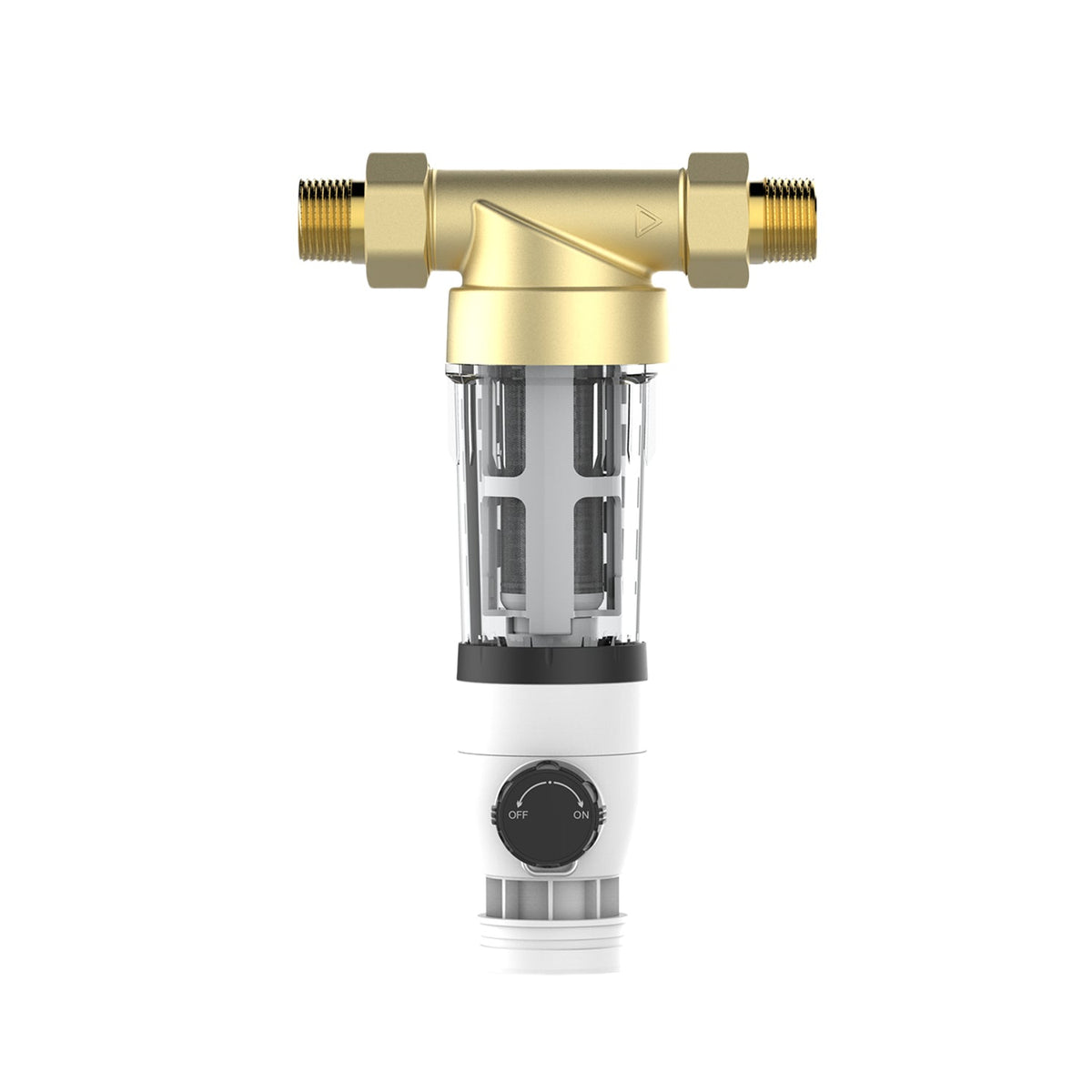
What counts as sediment?
Sediment is suspended material such as sand, silt, pipe scale, and rust flakes. It may come from a private well, storage tank, utility work, a water main, or aging household plumbing.
Visible rust flakes and dissolved iron are not the same. A particle filter can catch flakes larger than its rated opening. Dissolved iron can pass through clear and later turn orange or brown when it reacts with oxygen.
What should you look for?
Common particle sources


- Grit in faucet aerators. Repeated particles at several outlets can point to the source or main plumbing.
- Cloudiness after maintenance. Well, tank, hydrant, or utility work can release settled material.
- Orange stains or metallic taste. Test for dissolved iron and check plumbing corrosion before assuming a spin-down filter will solve it.
Which filtration step fits the problem?
Catches larger particles and can be flushed without replacing a cartridge. It is commonly used as the first step.
May be added for smaller suspended particles, with pressure drop and replacement frequency considered.
Dissolved iron, manganese, or recurring staining should be evaluated with a water test and equipment chosen for that chemistry.
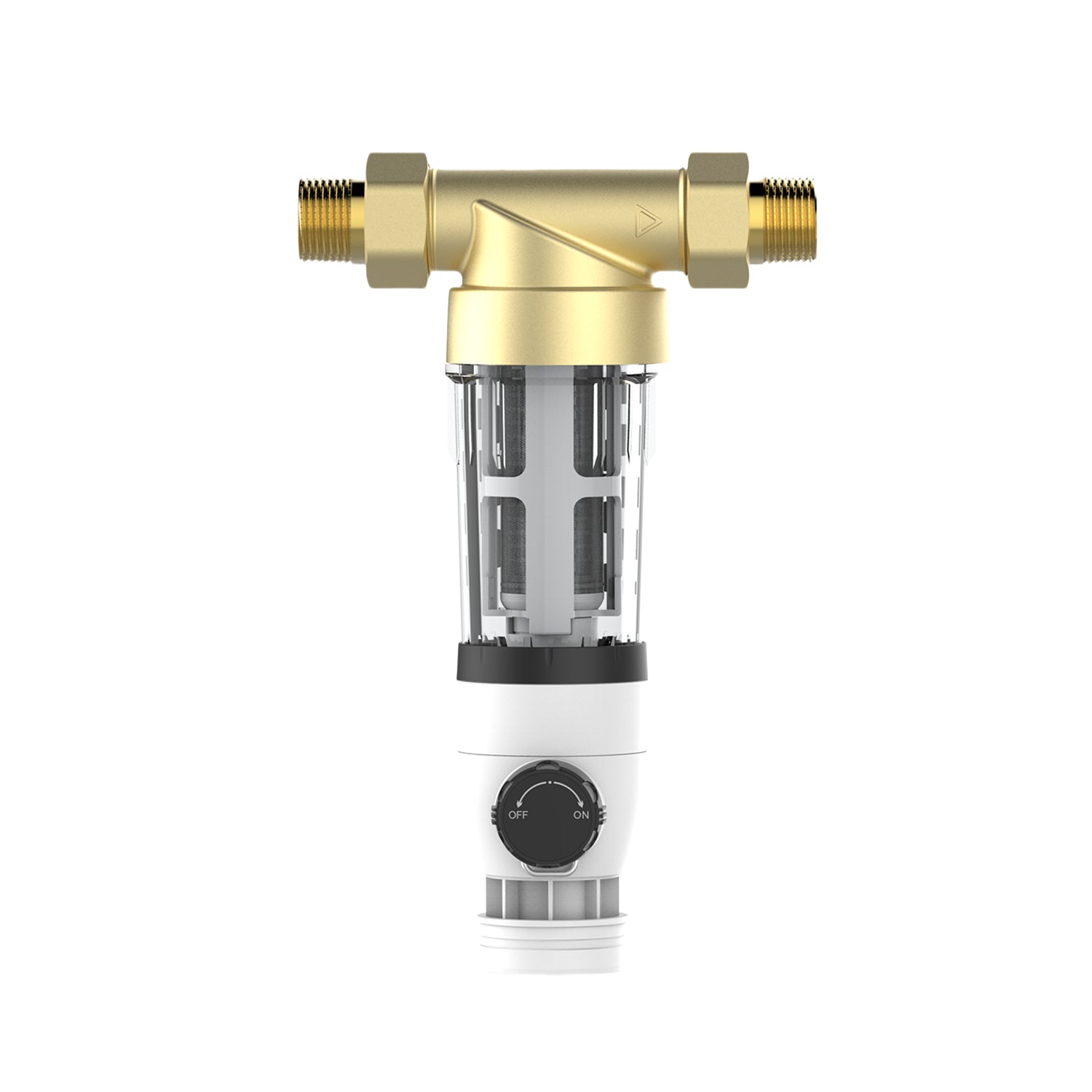
Protect downstream equipment first
GX-SP-02 is designed to catch larger visible particles before they reach finer filters, UV chambers, scale-control equipment, faucets, and appliances.
40-micron particle stage
Smaller particles can pass through and may require a finer filter after the spin-down unit.
Plan for flushing
Leave room to inspect the screen and route flush water to a practical drain or collection point.
Know the limitation
This product does not claim to remove dissolved iron, hardness, chlorine, chemicals, bacteria, or viruses.
Not sure whether you have particles or dissolved iron?
Send photos of the material or staining, your water source, test results, pipe size, pressure, peak flow, and the planned flush location.
Check My SetupFrequently asked questions
Does a spin-down filter remove dissolved iron?
No. It catches particles larger than its rated screen opening. Dissolved iron requires testing and a different treatment method.
Will it remove bacteria or viruses?
No. Particle filtration and microbial treatment are different jobs.
What does 40-micron mean?
It is the listed particle-screen size for GX-SP-02. Smaller particles can pass through.
Where should it be installed?
It is normally placed near the point of entry before downstream equipment, with enough room for inspection and flushing.
Color alone cannot confirm whether a problem is sediment, dissolved iron, corrosion, or a microbial issue. Test the water when the cause is unclear.